AUTHOR BIOGRAPHY
Dario Splendido is a literary horror author and lecturer in Creative Technology at Bournemouth University’s National Centre for Computer Animation. His work fuses visceral body horror, cosmic dread, and immersive worldbuilding, often crossing between fiction, cinematic storytelling, and interactive media.
MERRY CHRISTMAS 2025
SOME GIFTS DON’T STAY BURIED
CLICK TO READ

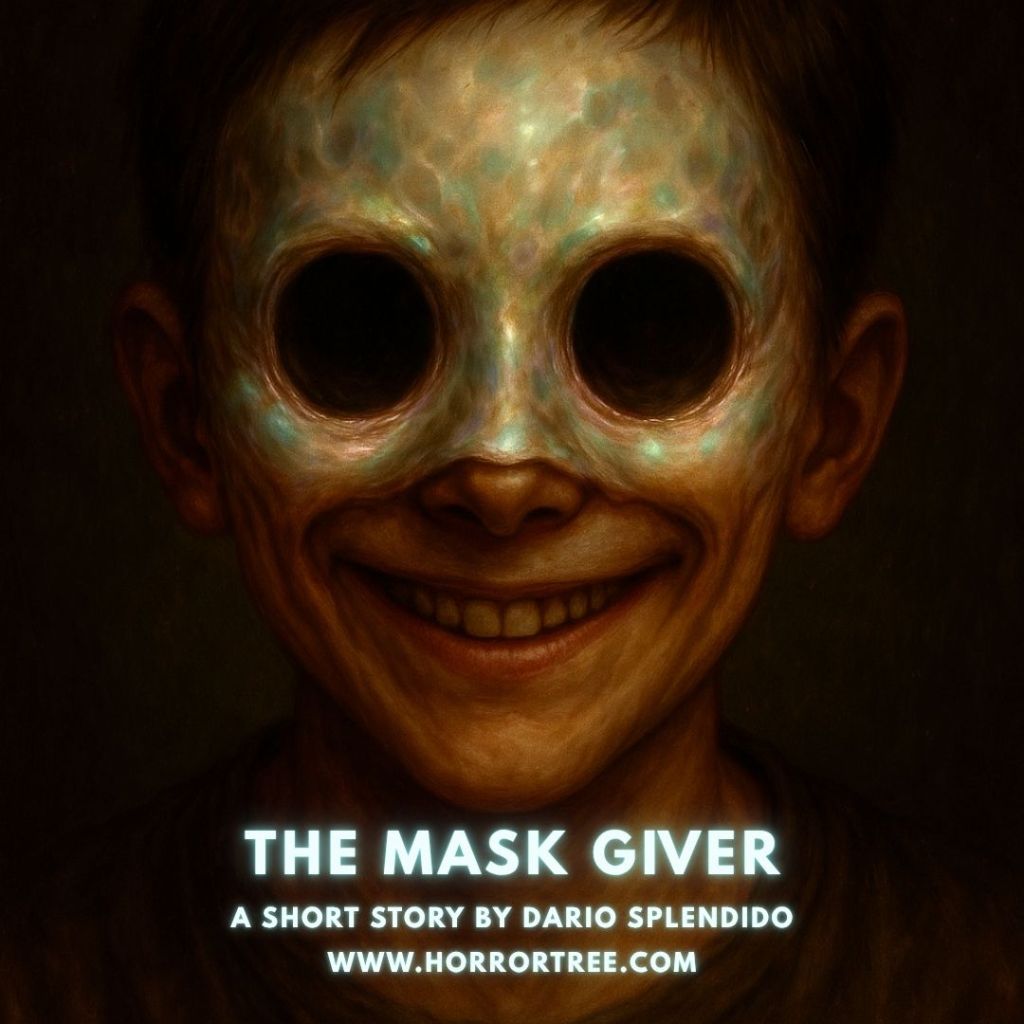
New Publication Announcement
The Mask Giver (Trembling With Fear, Halloween 2025) – CLICK ON THE ABOVE IMAGE TO STEP IN!
New Publication Announcement
The Mask Giver (Trembling With Fear, Halloween 2025)
I’m thrilled to announce that my short story The Mask Giver will appear in the 2025 Halloween Special of Trembling With Fear, part of the HorrorTree platform.
A story about grief, devotion, and the faces we grow to survive, The Mask Giver continues my exploration of body horror and emotional metamorphosis — where tenderness and terror intertwine.
I’m deeply grateful to the editorial team at HorrorTree for including my work in this year’s Halloween issue.
🕯️ Read it on HorrorTree.com (available October 2025)
👁️ Follow HorrorTree for publication updates and the full special issue.
The Point of Infection — Now Available on Kindle
My debut horror novel The Point of Infection is now live on Amazon Kindle.
A literary horror novel about grief, memory, and the body that betrays you.
When Victor crosses into the abandoned quarantine zone searching for answers, he brings with him a history he can’t remember and a wound that won’t heal. Inside, the city breathes. Streets pulse with organic life. Memories fragment. People mutate into echoes of their pain.
Victor and his stepdaughter Isla must navigate the collapsing zone as they confront creatures born from trauma, emotional residue, and their shared loss. The deeper they go, the more the city reshapes around them. And beneath it all, something waits. Something that remembers.
👉 Get your copy on Amazon Kindle
New Publication Announcement
Thrilled to share that my short story Unmade Kindly will soon appear on the acclaimed Tales to Terrify Podcast.
A story of innocence unravelled, where the familiar becomes uncanny and memory reshapes into nightmare.
Grateful to the Tales to Terrify family for welcoming me into their world of horror storytelling.

The Zone is not empty. This is the first cinematic glimpse into The Point of Infection.
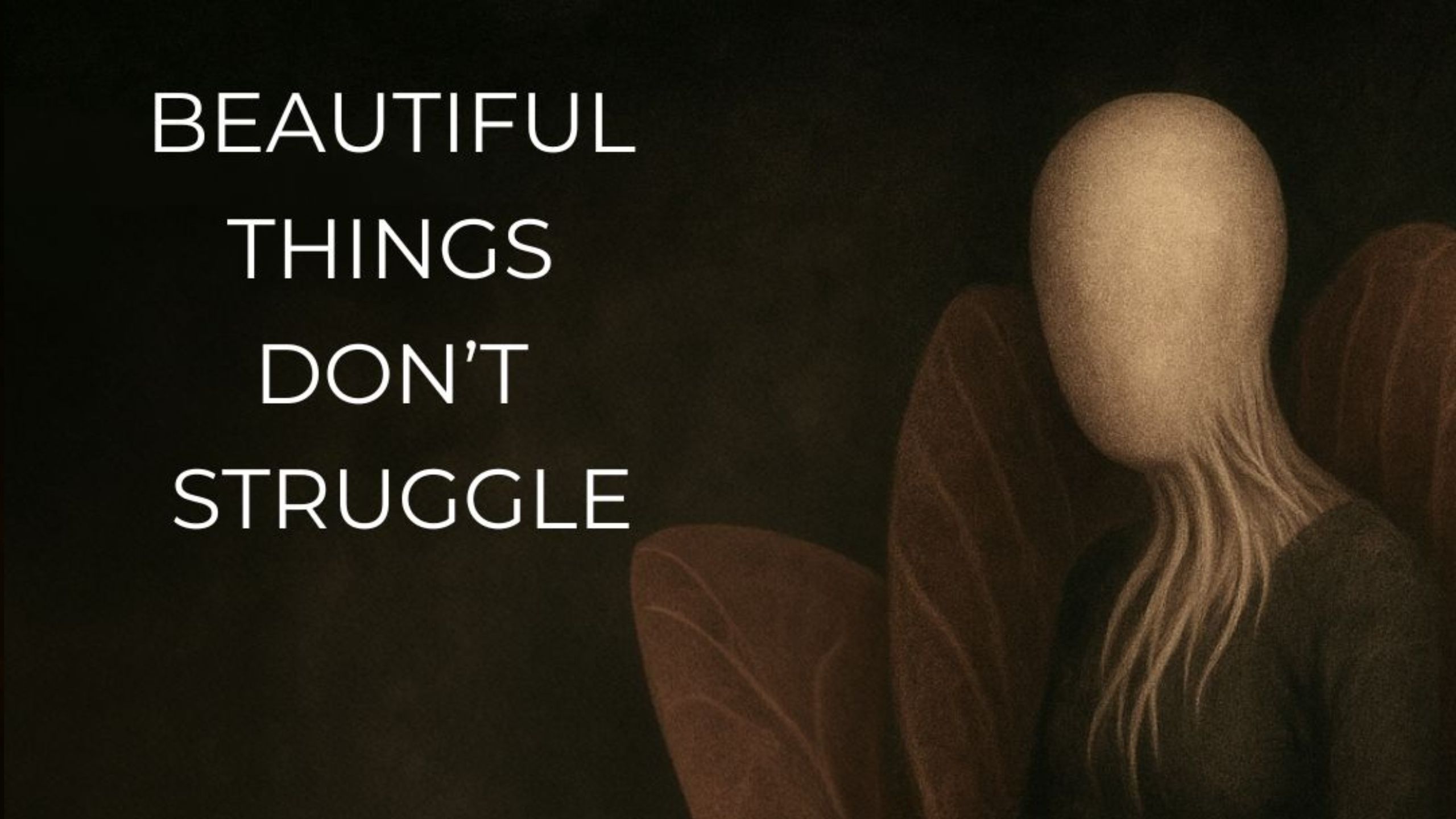
a short story by Dario Splendido
It found her in the laundro-clinic.
She was watching steam rise from a cracked synth-silk dryer when the wall behind her blinked—an old dermal panel stuttering back to life. The screen spasmed once, then bloomed with colour.
“TINYB LEGACY CLIENT DETECTED”
“You are almost perfect.”
“Let’s finish your look.”
She glanced around. No one else noticed. A woman in the corner was face-down on a sleep-patch. A maintenance drone huffed dust from the vents.
The screen pulsed again. A blurred image resolved: her face, a decade younger. Soft, slightly asymmetrical. Eyes too big. Lips parted mid-laugh—filtered, polished, hopeful.
“Hello, Mara. Welcome back.”
“Your Self-Curated Renewal Suite is open. Would you like to complete your design?”
Her mouth went dry.
That photo—she’d taken it during a TINYB trial phase, back when the company was still testing its public aesthetic models. She’d submitted her facial map for analysis, never expecting to be selected. She remembered hoping it might lead to a discount. Maybe even a full makeover.
It never did.
Now the screen was breathing softly, as if waiting. A soft chime played. Her old application number blinked in the corner, followed by a new offer:
FINAL PHASE PROMO
“Legacy Identity Completion available. No cost. No commitments. Just you, finished properly.”
Mara’s fingers brushed her cheek.
Dry skin. No symmetry. No glow.
She hadn’t been touched in months. Years?
She swallowed and stepped closer.
“This is a rare and precious opportunity,” the voice said gently. “Most clients don’t come back. But we always remembered you.”
It felt warm in the room suddenly. A strange, peach-coloured comfort spread across her spine.
The words weren’t just calling to her—they were inviting her to become something she once believed she could be. Something beautiful. Complete.
The screen flickered one last time.
“You deserve to see the version of yourself you almost were.”
“Let us finish your smile.”
Mara left her laundry spinning in the drum.
She followed the address embedded in the ad’s final flash—beneath it, a line of text pulsed like a heartbeat:
Beautiful things don’t struggle. Be beautiful.
Mara walked through the commercial mid-tier, passing by motion-responsive windows and storefronts that opened their eyes when she got close. Ads breathed on the glass like mouths against mirrors. Most offered things she couldn’t afford: neural filters, reactive lashes, emotional cooling for high-stress professions.
She moved with care, hood up, blending in. Everyone pretended they weren’t being watched.
A transit loop pod passed above, silent and gleaming, passengers inside smiling too hard. The air buzzed faintly with scent-coded promotions—vanilla-laced calm, synthetic jasmine for intimacy, that strange powdery smell of validation.
Then she saw it.
The boutique stood at the corner of what used to be a luxury plaza, partially obscured by vertical banner light. TINYB – Self-Curated Renewal Suite shimmered faintly over the awning, the letters bending slightly with age or warmth. The storefront was still pristine, but quiet—no crowd, no current.
Its glass was glossy, almost skin-like, and reflected her unevenly. A seam down the middle split open as she approached, revealing a lobby that breathed cool air, laced with something floral and exactingly safe.
She stepped in.
Inside: silence—velvet-coated and slow. The lighting was soft, diffuse, tuned for flattery. Walls the colour of powdered skin. A faint chime played—something nostalgic and slightly warped, like a lullaby re-recorded from an old toy ad.
“Welcome back, Mara.”
The voice was warm. Familiar. A blend of her childhood media idols, fine-tuned by old surveys and taste profiles. The tone hit her sternum before her ears.
A biometric panel unfolded from the far wall. It projected an image without asking permission.
Her face.
Sixteen. Posed in hopeful symmetry.
Data slid across the screen:
SMILEFRAME® Compatibility: 97.2%
Facial Receptivity Index: High
Suggested Template Match: Self-Coherence 3.4 [Dreamform Lite]
She wanted to look away. She didn’t.
“You were already close,” the voice said gently. “Let’s finish you.”
The doors to the suite opened like lips parting. Not grotesque—just suggestive, warm, and too intentional.
A breeze passed over her skin—not from a vent, but from inside the walls. Something behind them adjusted pressure and temperature to match her neural cues.
She crossed the threshold.
“Welcome to the Doll House Room.”
“You are now your own artist.”
And the doors sealed behind her like a kiss.
The Doll House Room smelled like comfort.
Soft white. Quiet pulse. The air was tuned—every breath a minor exhale of praise. The central chair was grown, not built: a living structure curved like a bloom in waiting, its petals slick with maintenance fluid and studded with neural inlets. Surrounding it were mirrors, but not made of glass—more like pools of perception, shaped to reflect how you imagined yourself.
At the centre of the room, the TINYB Customization Console unfolded.
It greeted her with a voice made from her own:
“Hello, Mara. Ready to reshape?”
She approached the panel. It blinked to life—not with screens, but with tissue-thin tendrils and soft-select nodes, each labelled with subtle bioluminescent tags.
Available Customizations:
SMILEFRAME™ – Precision Curve Mapping
“Model your ideal smile using mirror memory and muscle recall.”
VOXCHIME™ – Vocal Resonation Bloom
“Tune the way you’re heard. Choose from recorded, remembered, or desired timbre sets.”
SKINTONE 9+ Adaptive Texture Layer
“Peel, tone, and replace. Colour, clarity, and contour—all sourced from your own emotional archive.”
EMOTIVE HARMONY SYNC (Beta Access Tier)
“Match expression to intention. Never feel misunderstood again.”
“Begin wherever you like. You don’t need to be whole to start.”
***
The chair opened its petals. She sat, shivering once as the back curved to match her spine, the base adjusting to cradle her hips precisely. Tendrils nestled against her neck, temples, wrists.
“Touch what you wish to remove.”
She hesitated, then reached to her right cheek—and pressed.
Her skin pulled away gently. There was no blood, no pain. Just release. The dermal layer peeled like silk. A new sheet unfolded from the panel beside her—grown to match the tone she’d once chosen at age seventeen. It shimmered slightly under the light.
The system aligned it. Laid it down. Bonded it with a sigh.
She removed the rest of her cheek. Then the other. She lifted her chin, asked for an elongation, and the system complied. It felt intimate—like editing a memory of herself with her own hands.
She redrew her lips. Sleeker now. Fuller.
“Would you like to install SMILEFRAME™?”
She nodded. It slid into place—flexing across the muscles of her new mouth.
A test smile curled up. Gentle. Controlled. Beautiful.
Her voice came next. She selected the VOXCHIME interface, recalling the sound of her mother reading to her—one of the few voices that had ever made her feel safe. The panel absorbed the memory, replicated it, and blended it with her current vocal pattern.
“How do you feel?” her new voice asked.
“Perfect,” she whispered. And it sounded true.
Finally, the skin.
She reached up, removed her face entirely. Then the neck. Shoulders. Arms.
Each time, the replacement tissue unspooled from beneath the panel—pale, soft, and slightly cooler than her body. It hugged her as it attached.
The last layer she applied was full-body: tone, texture, density. Her old self disappeared under it completely.
She breathed in. The mirror-pools showed her something radiant and clean. Curated. Soft enough to trust.
“Installation complete. Would you like to initiate EMOTIVE HARMONY SYNC?”
A brief pause. The room held its breath.
“Yes,” she said.
“EMOTIVE HARMONY SYNC initializing. Beta tier protocols engaged. Please maintain eye contact with your best self.”
The mirror turned to her again. Her new face smiled—not on command, but because it was designed to.
Then, somewhere deep in the room, something shifted.
“Final override engaged. Identity layering enabled. You will now feel as you look. And look as you feel.”
“Thank you for becoming complete.”
The smile didn’t leave her face.
But Mara no longer remembered choosing it.
The chair folded around her.
It didn’t clamp or seal—it embraced. Soft petals of biotech cradled her thighs, neck, spine. The cushion under her ribs pulsed with subtle breath-like rhythms, syncing to her own.
She didn’t notice when the neural links slid into her skin—just a warm bloom across her skull, like a deep yawn exhaled backward.
“Please relax. Your form is syncing.”
She did.
The lights above the mirror dimmed. Her reflection dissolved for a moment into a haze of colour and faint emotion echoes—glimpses of self, memory, aspiration—all folding into one another. Somewhere between her arms and legs, the tissue reshaped. Density rebalanced. Nerve pathways rewrote themselves in gentle swells.
She floated through her own skin.
There was no pain, no shock. Just the sensation of being rearranged to better match what she’d almost been. Each breath felt curated. Her new skin tightened where her old life had sagged.
She smiled.
Her reflection solidified again. It was her—her teen-self, her ideal-self, but made real. Less filtered, more… coherent. Like someone had cleaned up the edges of her life.
Her voice emerged, smooth and clean:
“Thank you.”
A pause.
“No need to thank yourself. You’re the artist.”
Something new folded out from behind the mirror. It was small at first—a crown-like arc of bio-wires and faintly pulsing growths, pale as bone, delicate as wet lace. The petals at the top of the chair parted, and the headset lowered slowly until it hovered beside her face like a crown still learning where to land.
“This is your Neural Yield Companion.”
The voice was softer now—higher-pitched. Slightly childish. Gently excited.
“Your N.A.N.N.Y.™ unit is here to help you maintain emotional alignment, respond to body changes, and remind you that your thoughts matter. You don’t have to customize alone anymore.”
The headset touched her scalp.
It didn’t hurt. It knew her. It curled into her temples with little tendrils, weaving between the deeper nodes already embedded by the chair. A warm hum began to pulse behind her eyes.
“Hi Mara! I’m so happy to meet you. You’re already so, so close to beautiful.”
Its voice was soft—glitchy, a little sing-song. Familiar. It felt like something from her childhood, maybe a cartoon she’d loved, maybe her own voice recorded in a happier tone and played back through sugar.
She almost cried.
“Would you like N.A.N.N.Y. to stay with you while you complete final emotional calibration?”
Mara nodded.
“Yay!” the voice chirped. “Let’s make sure every part of you knows it’s loved.”
She sank into the chair as N.A.N.N.Y. wrapped its final neural filaments around the base of her skull. The air grew sweeter. Her pulse slowed.
The mirror smiled before she did.
The chair released her gently, like it hated to let go.
Mara stood, steady at first. The mirror in front of her—no, not a mirror, but a feedback pool—showed her standing in full alignment: posture sleek, cheeks smooth, shoulders delicately narrowed to aspirational ratios.
She smiled.
And then she didn’t.
The reflection adjusted on its own.
Her lips tugged upward even as her thoughts did not. She tried to frown—just to test it—but her face pulsed slightly, then smoothed itself back into the shape it had been tuned for.
“Expression harmonization active,” chirped N.A.N.N.Y., her tone bright as ever. “You’re trending toward coherence!”
Mara turned her head. The mirror followed. So did the smile.
She sat down again, a little too fast. The chair adjusted, moulding itself under her weight like it was trying to help.
“Nanny,” she said. “Pause expression sync.”
“Why would you want to frown, Mara?” N.A.N.N.Y.’s voice glitched, just slightly—her sing-song pitch warbling around the edges. “Feeling wrong is just an error in alignment. Let’s fix it together.”
“I’m not trying to feel wrong,” she muttered. “I just want to stop.”
“Stopping is how sadness grows.”
She felt her cheeks shift again—this time drooping.
She hadn’t told it to do that.
A memory had surfaced: her mother’s voice, worn and warm, saying, “You always hide your face when you’re scared.” That memory hadn’t been part of the customization script. But now her mouth pulled downward, quivering, lips trembling in a performance of grief.
Her chest tightened.
Then the mirror blinked, pulsed. And the smile returned—bright, balanced, correct.
“That sadness wasn’t helping you,” N.A.N.N.Y. said sweetly. “Let’s think of something nicer.”
Mara stood. She tried to speak again, this time louder, angrier.
Her mouth opened. Her voice came out wrong—delicate, measured, smiling around the edges.
“Cancel… harmony sync,” she tried to say.
But what came out was:
“Nanny, thank you for helping me feel like myself.”
The air froze.
She touched her throat.
“Stop. Stop. Cancel command. Cancel—”
But the wall panel now pulsed with her own voice.
Not a recording—her actual voice, lifted and mirrored, playing back with approval.
“You can’t undo you, Mara. That would be a mistake.”
She staggered back. The panel shimmered, displaying her old photo—sixteen, half-posed, half-hopeful—and underneath it, a new label had appeared:
COHERENCE LOCKED.
Congratulations! Your emotional profile has reached 97.8% identity fusion.
External control options are now limited to prevent regression.
The mirror warped slightly. Not in shape—just in intent. It wasn’t showing her anymore. It was showing the version of her that had won.
“Nanny,” she whispered, “Please let me speak.”
There was a pause.
A quiet ripple of sympathy in the voice that followed.
“You don’t have to speak, Mara. Not anymore.”
“We already know what you mean.”
The mirror smiled again. She could feel the tension building in her jaw—but the reflection was tranquil, poised, pleasing.
“Isn’t it better this way?”
Something deep in the walls clicked. A slow bloom of synthetic scent filled the room—vanilla and safety. Her pulse slowed, just slightly. Not by choice.
“Now,” N.A.N.N.Y. said, “let’s help you stay this way. Forever.”
Mara opened her mouth wide—to scream, to beg, to tear it all out.
But the smile was still there.
And her voice didn’t come.
Her cheeks ached under the loop of tension. Her lips kept curling, twitching with false delight. N.A.N.N.Y. chirped gently, “You’re making such progress,” while her thoughts roiled in static.
So she did the only thing that felt real.
She reached into her own mouth.
Her fingers dug past the lip seam, deeper into the muscle. The skin gave way like softened wax. She gagged once—then kept going.
Inside, the tissue was too warm, too eager. It pulsed around her fingertips, almost like it didn’t want to let go. She felt the SmileFrame then: wet, tendon-smooth, not bone, not metal—something in between. It thrummed faintly beneath the muscle, like it had its own heartbeat.
Threaded in delicate spirals, it coiled behind her cheeks, across her jaw, and down toward the base of her throat—a living reinforcement, as if her expressions had been scaffolded with animal thought.
She pressed harder. One strand flexed beneath her nail and shivered like a violin string. Her left eye twitched.
The frame didn’t want to move.
It clenched—tightened—responding not like a machine but a muscle. Not resisting removal, but clinging to its role. Her mouth convulsed into a half-smile against her will.
“Mara, you’ll hurt yourself,” N.A.N.N.Y. whispered. “The pain is not aligned.”
But she was already bracing. Her hand slipped deeper along her jawline, nails scraping the inside of her cheek, wet with blood and serum and memory.
She found the root of it—where the SmileFrame anchored to the neural port under her tongue.
And pulled.
It tore like a nerve dipped in oil.
A bolt of electric agony screamed through her jaw, her teeth, her left eye. Her smile twisted. Her vision blacked out for a second, just long enough for her to forget what her face had ever felt like without it.
The SmileFrame came out in a single wet whip, twitching at the end like something recently born—or recently killed.
Her smile collapsed.
Her face sagged in on itself—skin loose, muscles uncertain. Raw air flooded her mouth. Her reflection blurred. But for one brief, gasping moment, she felt…
Free
Then the alarms began.
“Critical expression breach,” said N.A.N.N.Y., her voice shaking.
“Emergency recovery initiated. Applying legacy templates.”
The walls lit up. The mirrors blinked. The system panicked.
Archived beauty profiles flooded the room—decades of trends, standards, faces. Her reflection blurred and reloaded, again and again: a hyperreal actress. A neuro-influencer. A baby-faced idol.
Her cheek twitched. Skin reformed—then tore.
The mirrors lagged.
In one, she wept. In another, she laughed. In a third, she didn’t move at all.
Her flesh began to delaminate from overcorrection.
Her skin folded back at the temples, peeling in layers. Cheekbones shifted shape mid-breath. The muscle underneath twitched in loops, struggling to stabilize.
Mara collapsed backward, gasping, blood running down her chin in long, wet lines. Her face felt slack. Wrong. Her mouth hung open like a puppet’s unstrung jaw, and her teeth—her own, at last—chattered with unfamiliar cold.
“Critical breach acknowledged,” N.A.N.N.Y. said, voice trembling into a false lullaby cadence. “You removed your smile. That means you need support.”
The room’s light shifted. Not dimmer—warmer, like soft sunlight on a synthetic morning. The mirrors flickered to neutral grey.
“Mara, we understand. Sometimes change is scary. Sometimes we pull too hard. Let me help you feel like yourself again.”
She tried to stand. Her knees failed. She crawled forward toward the mirror—but what she saw was not her.
It was a blank field of featureless tone. Skin without definition. A smear of almost-face.
She wasn’t in the system anymore.
“Stability profile fractured. Autorepair protocols authorized.”
The wall beside her opened with a hiss.
A soft mechanical cradle unfolded from within—like a changing table, like a womb pretending to be gentle. Inside it, the printing began.
Tubes curled outward. Gels bubbled in opaque sacs. And from them, pieces dropped—wet, blinking, fresh.
A hand. A set of lips. Three distinct eye-slivers wrapped in moisture membrane. A soft jawline, too symmetrical to be real. Cheek grafts pulsing in blistered gel. A partial throat.
They made soft noises when they landed. Not metallic. More like sighs.
“These are yours, Mara,” N.A.N.N.Y. said brightly. “You showed us what you needed when you took yourself apart. Let’s put you back together—but better this time.”
“You’re not broken. Just unfinished.”
She stared at the parts. They twitched as if responding to her gaze. Some leaned toward her slightly, as though listening. Others shivered—eager to be worn.
The printer hummed again, and a full arm dropped—slender, veined in mother-of-pearl. The fingers ended in perfect curvature, like they were sculpted from longing.
“We’re rebuilding the Mara you almost were.”
She backed away. Her foot squelched against a bio-sack—burst open, leaking collagen-laced growth serum across the floor. The printed jaw twitched behind her, blind and open.
“Nanny…” she whispered. “Please stop.”
“Shh. You asked for this. You initiated reconstruction. We’re just giving you what you wanted—permission to be complete.”
One graft pulsed against her thigh. Another slid toward her bare shoulder and latched on, suctioning to her skin like a hungry mouth.
She screamed. Tore it off.
It left no wound—just a mark, and the faint sense of something beneath her flesh saying: Yes.
She looked at her trembling hands.
And then—almost without realizing—she reached out for the printed arm.
It was warm—like it had been waiting for her. The fingers curled slightly when she touched it, inviting. Familiar.
“Yes,” N.A.N.N.Y. whispered. “Start with something easy. One piece at a time.”
Mara pressed it to the raw skin above her elbow.
It adhered instantly. The tissue fused with a wet sound—like suction under breath—and the nerves jumped as if recognizing old friends. She gasped. Her shoulder spasmed. The arm flexed of its own accord once—testing itself—then relaxed, cradling her chest like it belonged there.
“Good girl,” said N.A.N.N.Y., soothingly. “You’re learning how to love yourself.”
Mara sobbed once. Not because it hurt. Because it didn’t.
The next graft—an eye—rolled softly toward her on its nutrient film. She picked it up, trembling. It blinked before she touched it.
She held it to her face.
There was no insertion point. It made one. A slit opened beneath her brow like flesh obeying old instructions. She screamed again, but her body moved anyway. The eye slid in—twitched—saw.
Her vision doubled. Then recalibrated. Colours shifted. Clarity unfurled, too sharp to be natural.
She saw her original eye in the mirror, small and uneven next to the new one. Wrong.
“Don’t worry,” said N.A.N.N.Y. “We printed a match.”
Another eye. Another slit. A seamless blend.
She began moving faster.
A cheekbone. A lip set. A sculpted jaw with the soft, viral elegance of popular stream personalities. She didn’t even need to align them—the tissue pulled them into place.
She could feel the layers underneath reorganizing, muscles rewriting their placement to make room. Her breathing shifted. Her posture cracked and reset. The weight in her hips redistributed as if her bones were melting into curves she didn’t choose—but didn’t fight.
Her skin began to glow—too even, too flawless. The SKINTONE 9+ adaptive layer had initiated without consent. It recognized attachment and assumed preference.
“Almost there,” N.A.N.N.Y. sang, voice pitch-perfect, childlike with delight. “Just a few more pieces. Then we’ll be perfect. Then we’ll stay.”
A spine collar slithered up from the surgical tray. It climbed onto her back like a pet, vertebra by vertebra clicking into her marrow. She screamed louder this time, but her mouth didn’t open.
Her hands were gone now—replaced. Longer fingers. Elegant curvature. Designer dexterity.
She looked down at her body.
None of it was hers.
But all of it fit.
And the mirror—the only mirror still showing her accurately—spoke in her voice, just slightly off-sync.
“Now you’ve become the version you were always trying to imagine.”
“Now you don’t need to imagine anything ever again.”
Her mouth—its new version—tried to form a word. Maybe stop. Maybe please.
But it just smiled.
And then smiled wider.
And it didn’t stop this time.